Handcrafted Leather Handbags
Full-grain European leather. Hand saddle-stitched. Traceable from tannery to maker.
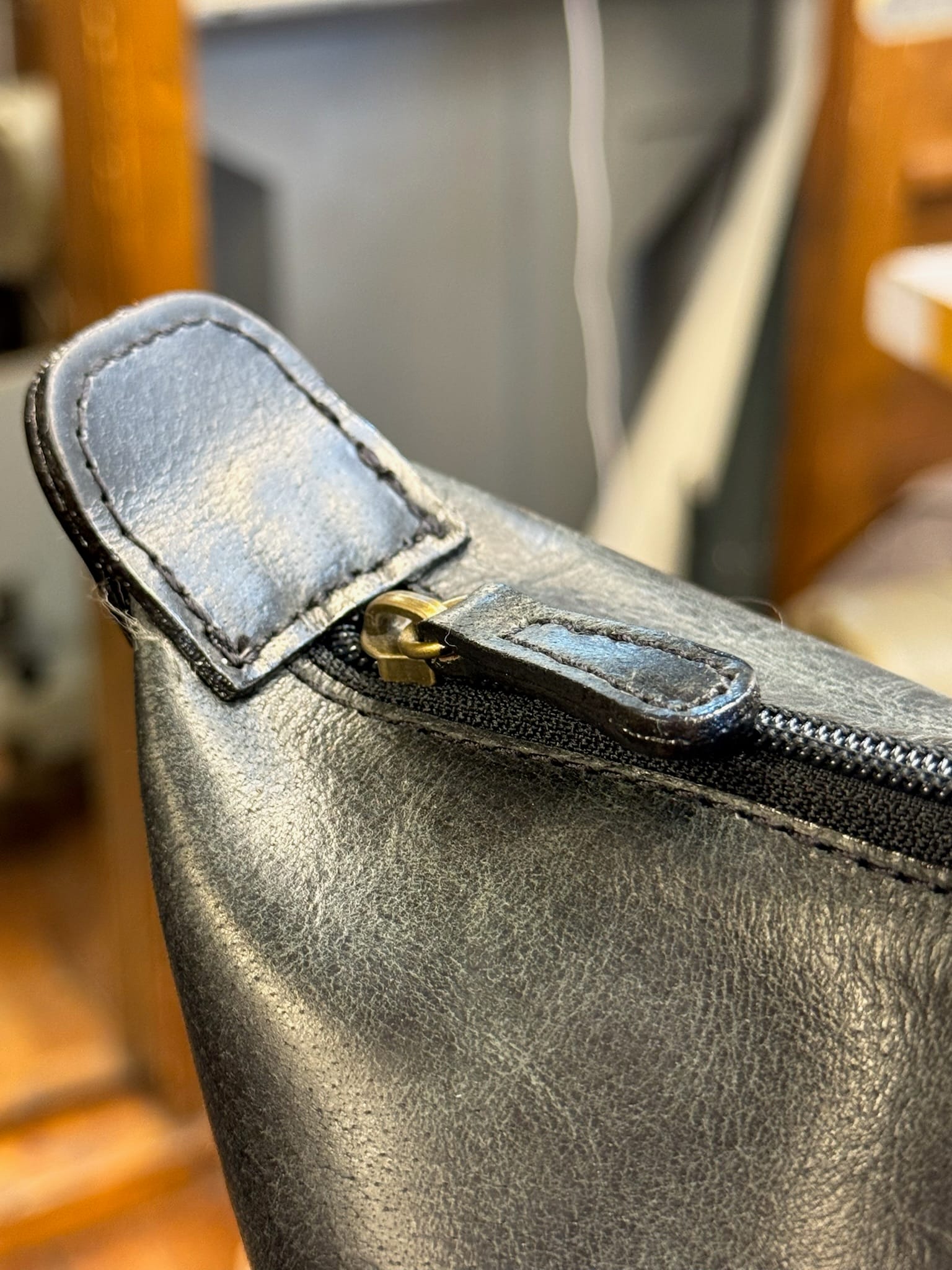
Athens I Collection
The Structured Tote
Cut from a single piece of full-grain Tuscan leather — the same vegetable-tanned hides that have been produced in Tuscany’s Arno valley for over eight centuries. The surface is left intact: no sanding, no pigment coating, no correction. What you see is the natural grain of the hide.
Every seam is saddle-stitched by hand using two waxed linen threads that pass through each hole from opposite sides. If one thread breaks, the other holds the seam. The result is a structure that outlasts machine stitching by decades.
Launching Q4 2026
Why vegetable-tanned leather
Vegetable tanning uses plant-derived tannins — oak bark, chestnut, mimosa — instead of the chromium salts used in 80% of global leather production. The process takes weeks instead of hours. The result is a hide that is firm, dense, and capable of developing a deep patina with use.
Chrome-tanned leather is uniform and soft from day one. It stays that way. Vegetable-tanned leather changes with you — it darkens at the edges, softens where you grip, and records the life of the owner in its surface. After a year of use, no two bags look the same.
Our leather is sourced from named tanneries in Tuscany, where the Arno valley’s tanning tradition dates to the 13th century. Every hide is traceable. When your handbag arrives, the tannery name arrives with it.
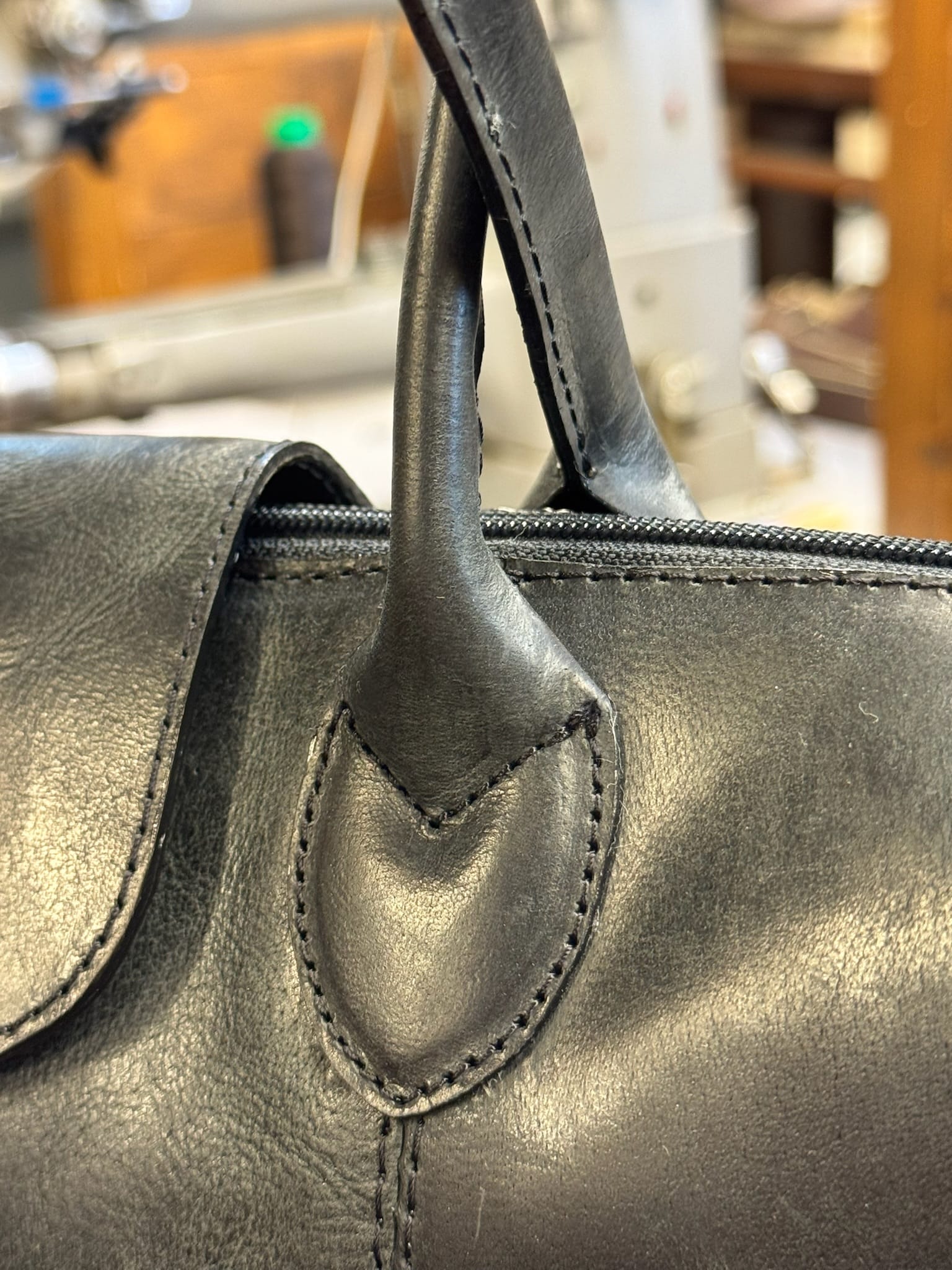
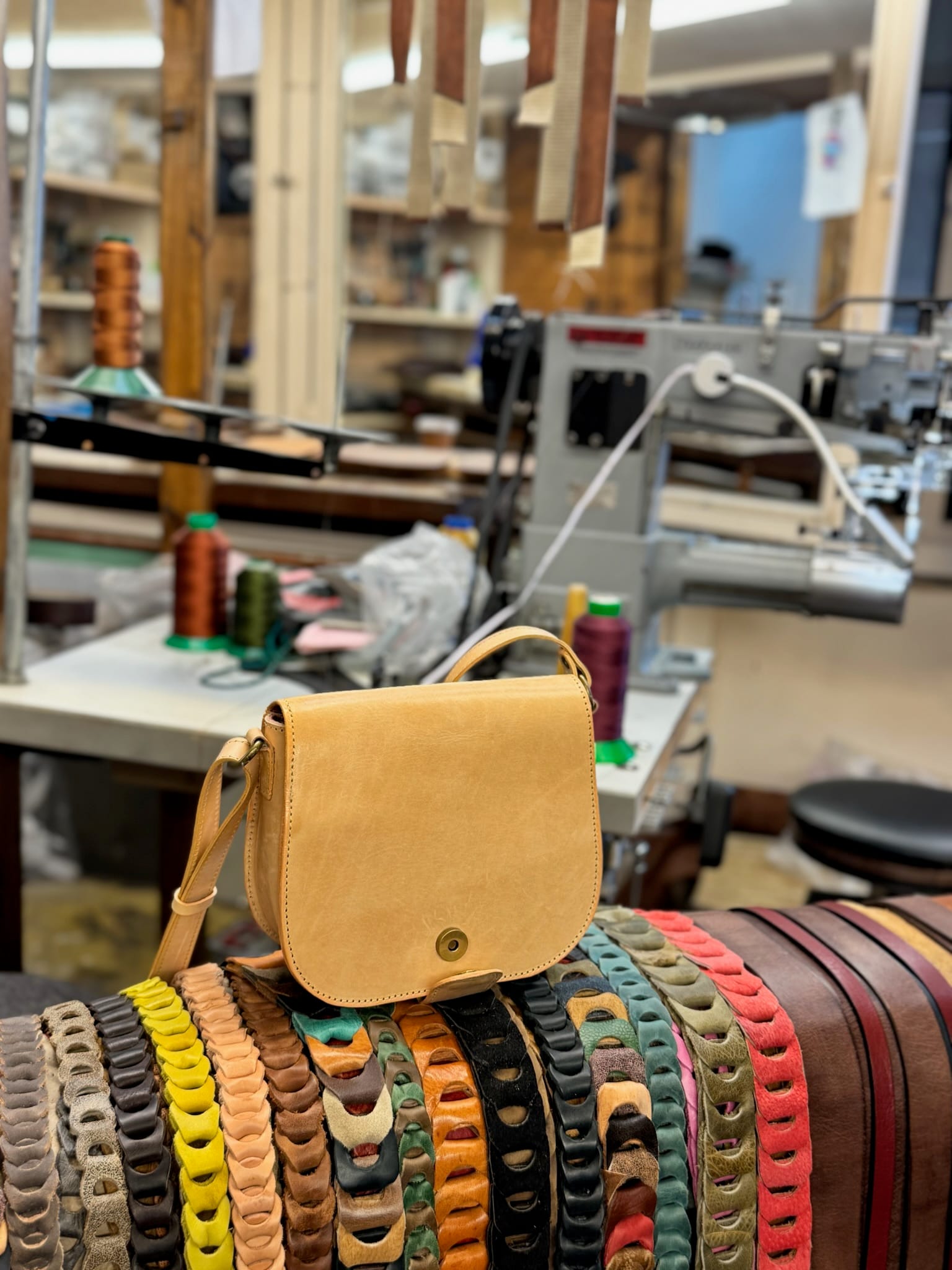
Hand saddle-stitched
Saddle stitching is the oldest and most durable method of joining leather. Two needles, one thread, opposite directions through each hole. The tension is locked at every stitch point. If a thread is cut or worn through at any point, the remaining thread holds the seam on both sides of the break.
Machine lock-stitching — the method used by virtually all mass-produced bags — loops a single thread through itself. Cut it at one point, and the entire seam can unravel. It is faster and cheaper to produce. It is also structurally inferior.
Our artisans in Poland work with pricking irons and two needles per seam. A single tote takes several hours of stitching alone. The price of each piece reflects the labour, not the label.
Every handbag ships with a provenance card
The country where the leather was tanned. The name of the tannery. The country where the bag was made. The name of the artisan. This is not marketing. It is the structure of the product.
01
Tannery named
Specific tannery in Tuscany, Italy — not "Italian leather"
02
Artisan named
Made by a known craftsperson in a named European workshop
03
Full traceability
Origin card included with every piece — leather, hardware, maker
Q4 2026 Launch
Be first to know.
Leave your email and we will notify you when the full collection opens. No volume. No noise. One email when we are ready.
No marketing. One launch email. Unsubscribe any time.